Not all fireplaces are created equal. The options pile up fast, however, and so does the jargon that comes with them. Before you can make a good decision, it helps to know what you're actually choosing between.
Whether you're after the real crackle of a wood fire or something lower maintenance, indoors or out, each type of fireplace comes with its own trade-offs. Getting familiar with the basics now saves a lot of backtracking later.
The Main Types of Fireplaces The Main Types of Outdoor Fireplaces
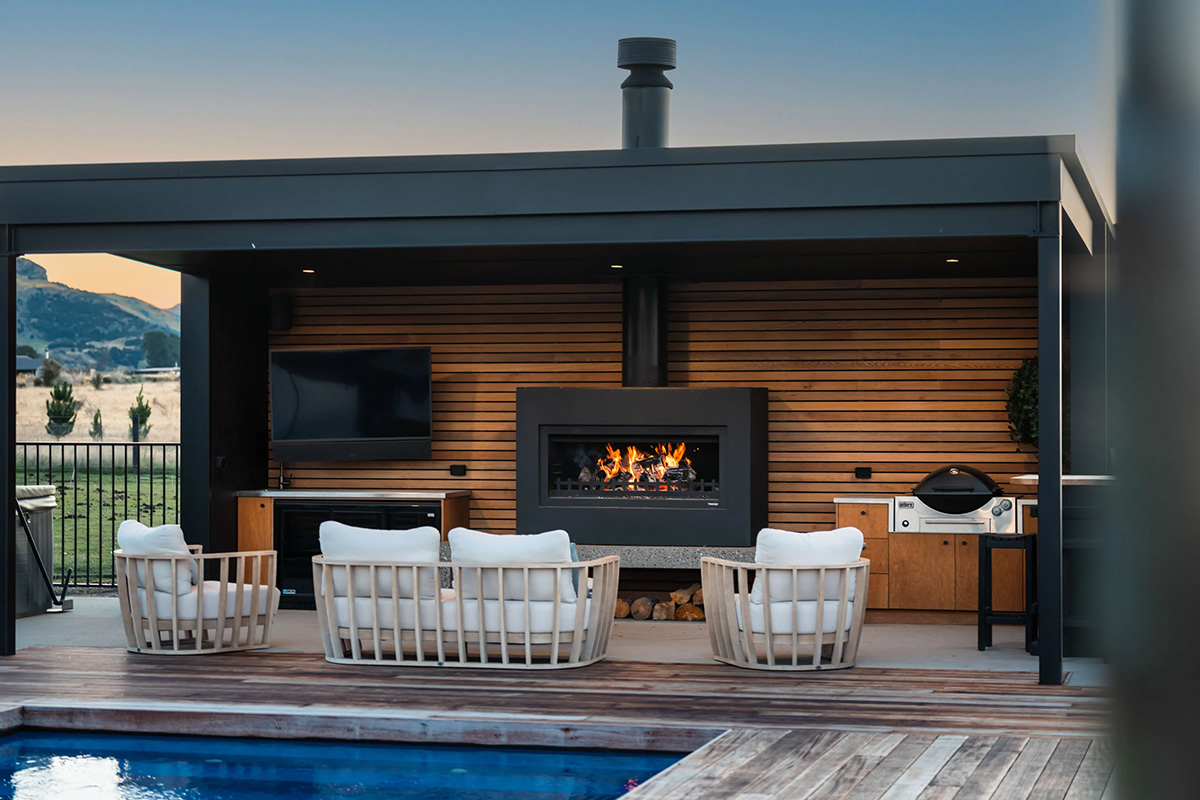
1. Wood-Burning Fireplaces – Nothing else fully replicates the crackle, scent, and glow of a real wood fire. A chimney or flue is required to draw smoke out, and regular cleaning keeps everything safe and efficient. Masonry builds are constructed on-site from brick, stone, or concrete. This makes them durable, but labour-intensive and expensive. Prefabricated versions use a metal firebox in a framed surround, which makes them more affordable and quicker to install, though generally with a shorter lifespan.
2. Gas Fireplaces – Convenience is the main draw here: instant ignition, no wood stacking, no ash cleanup, and adjustable flame height. Running on natural gas or propane, they can be vented or vent-free, though vent-free models aren't recommended for enclosed spaces due to air quality concerns. Wood and gas fireplaces each have a strong case depending on how you plan to use your space.
3. Electric Fireplaces – No venting, no fuel, and minimal installation required. LED lighting simulates flames, and most units double as a space heater, making them a practical option for apartments or rentals where real fires aren't allowed. Running costs are low, and setup is straightforward, but the experience doesn't come close to a real fire. The flame effect is noticeably artificial, and there's no heat output that fills a space the way wood or gas does.
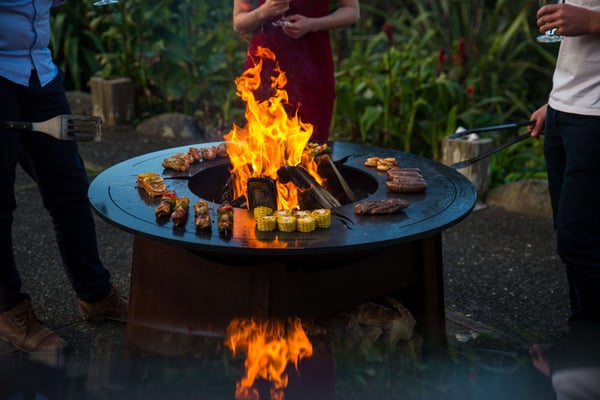
4. Fire Pits – Open bowls or rings for burning wood. Casual, affordable, and simple, but more exposed to wind and more likely to send smoke in the wrong direction. A fire pit works well for a relaxed backyard setup, but for something with more presence and practicality, an outdoor fireplace is the better call.
Ready to see what's available? Download our outdoor fireplace brochure and browse our full range.
Fireplace Terminology You Should Know
Once you've picked a type, the components are where things can get confusing fast. Suppliers, spec sheets, and installation guides tend to assume you know what a flue is, or why the firebox material matters, or what a damper actually does. Many people don't, at least not until they've already gone down a rabbit hole. These are the terms worth knowing.
Firebox – Where the fire actually burns. Built to contain heat and withstand high temperatures, the firebox is one of the most important parts of any fireplace. Material choice matters more than most people realise: metal and firebrick behave differently over time, and what makes a good firebox is worth understanding before you commit to any build.
Chimney and Flue – Smoke and combustion gases exit through the chimney, which is the vertical structure above the fireplace. Running through it is the flue, the actual passage through which those gases travel. A correctly sized flue matters because it creates the draw that keeps smoke moving upward rather than back into the space.
Damper – A movable plate inside the flue that controls airflow. Open when the fire is going, closed when it isn't. Keeping it closed between uses prevents heat from escaping and stops cold drafts from coming in.
Hearth – Stone, brick, or concrete flooring at the base of and directly in front of the fireplace opening. Its job is to protect surrounding surfaces from heat and stray embers.
Mantel – Mostly decorative, sitting above the fireplace opening. It tends to become the natural focal point of any room or outdoor space it's in.
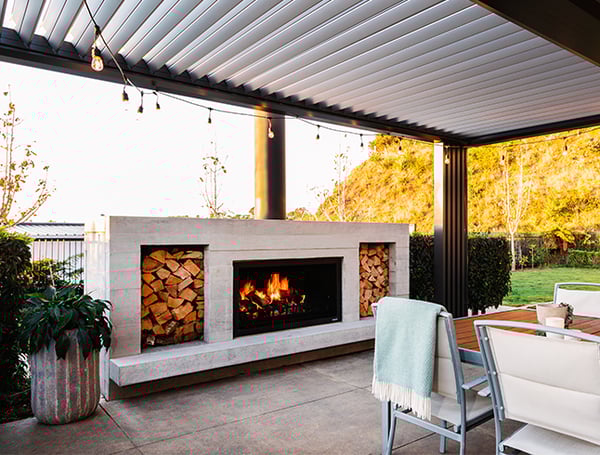
Woodbox – A built-in storage compartment that keeps firewood close at hand without cluttering up the space. A small feature, but a genuinely useful one on a cold evening.
Grill – Some outdoor fireplaces include a grill attachment for cooking directly over the fire. This is worth looking for if you want your setup to pull double duty.
Choosing an Outdoor Fireplace in New Zealand
For anyone looking at outdoor fireplace options, material is usually one of the first real decisions. Concrete and steel are the two most common building materials, and each suits different climates, styles, and budgets. It’s worth getting a good grasp of the differences before you commit.
Once you know what type of outdoor fireplace suits your space, figuring out what one costs is the natural next step. This is important to get your head around early, since cladding, delivery, and site prep all factor in differently depending on what you're after.

Have a question? Contact us