
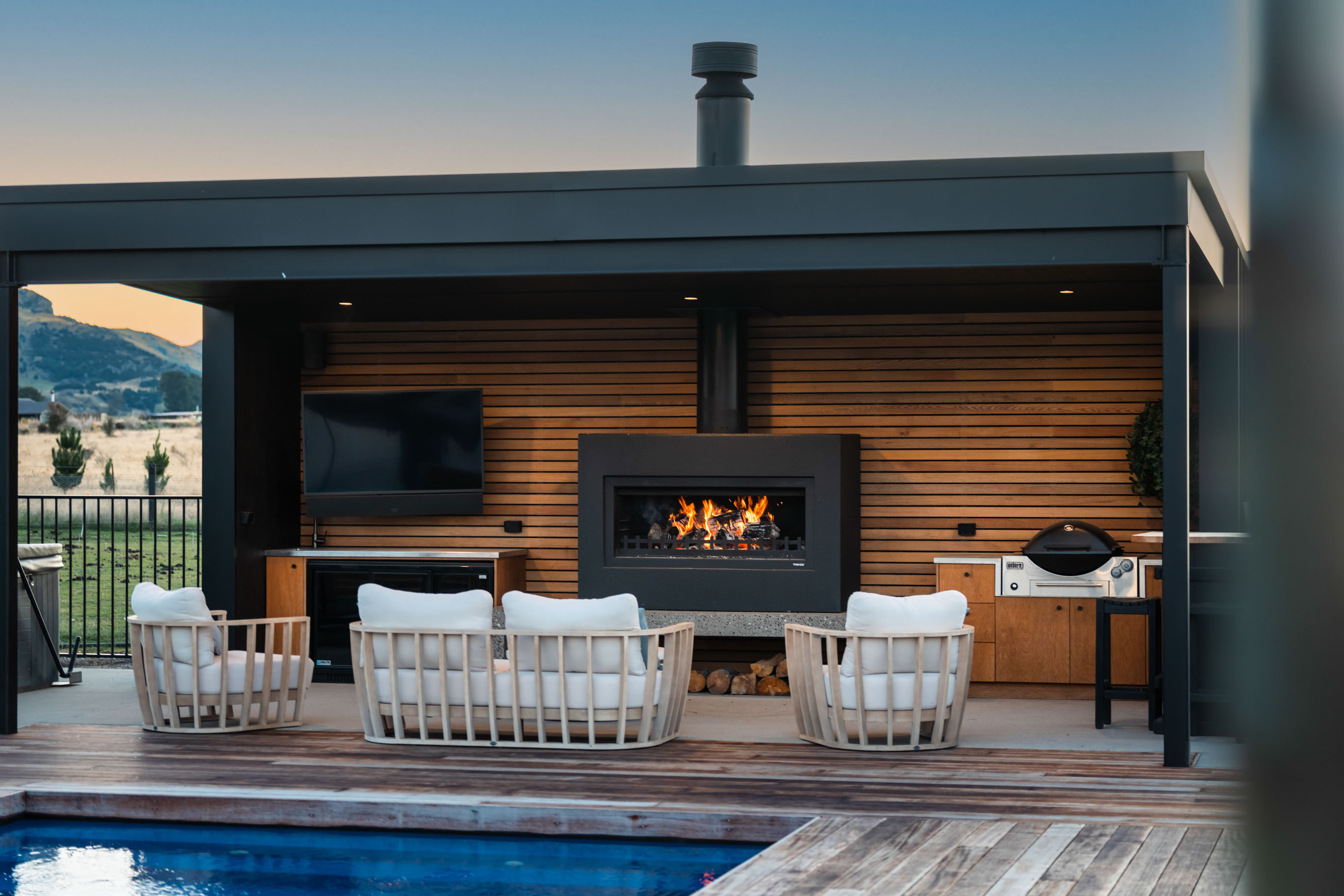
If you're planning an outdoor entertaining area, it’s natural to wonder whether a fireplace can sit underneath a louvre system, pergola, or covered outdoor roof. These spaces are designed for year-round use, so adding a fireplace feels like the perfect finishing touch.
So let’s answer the big question:
Yes, you can install an outdoor fireplace beneath a louvre or fixed roof. But the success of the design comes down to one key factor: placement.
How Placement Affects Compliance & Cost
As you know, fireplaces produce heat. When they’re positioned under a structure, that heat needs to be safely managed. The closer the fireplace and flue are to roofing, beams, or louvre blades, the more protection is required.
If the flue sits directly beneath the roof opening or passes through it, the system will typically require a:
- Triple-skin (insulated) flue, and
- Additional heat-shielding components to meet safety standards.
These additions are completely achievable and ensure the roof remains safe from heat transfer, but they do however, increase the overall cost and structural complexity. Plus, require skilled tradespeople to install them.
 Burton Fireplace: Plastered & painted Blackjack | Polished Plinth | View this fire
A Smarter Alternative: Shift the Placement Slightly
In many designs, simply moving the fireplace back by a metre or two , so the flue is outside the louvre coverage, eliminates the need for insulation upgrades.
This small adjustment can make a big difference by:
- Reducing cost
- Simplifying installation
- Avoiding penetrations through the roofing system
- Maintaining compliance with minimal added components
You still get the seamless indoor-outdoor feel, without over-engineering the solution. But this alternate isn't always right for everyone.
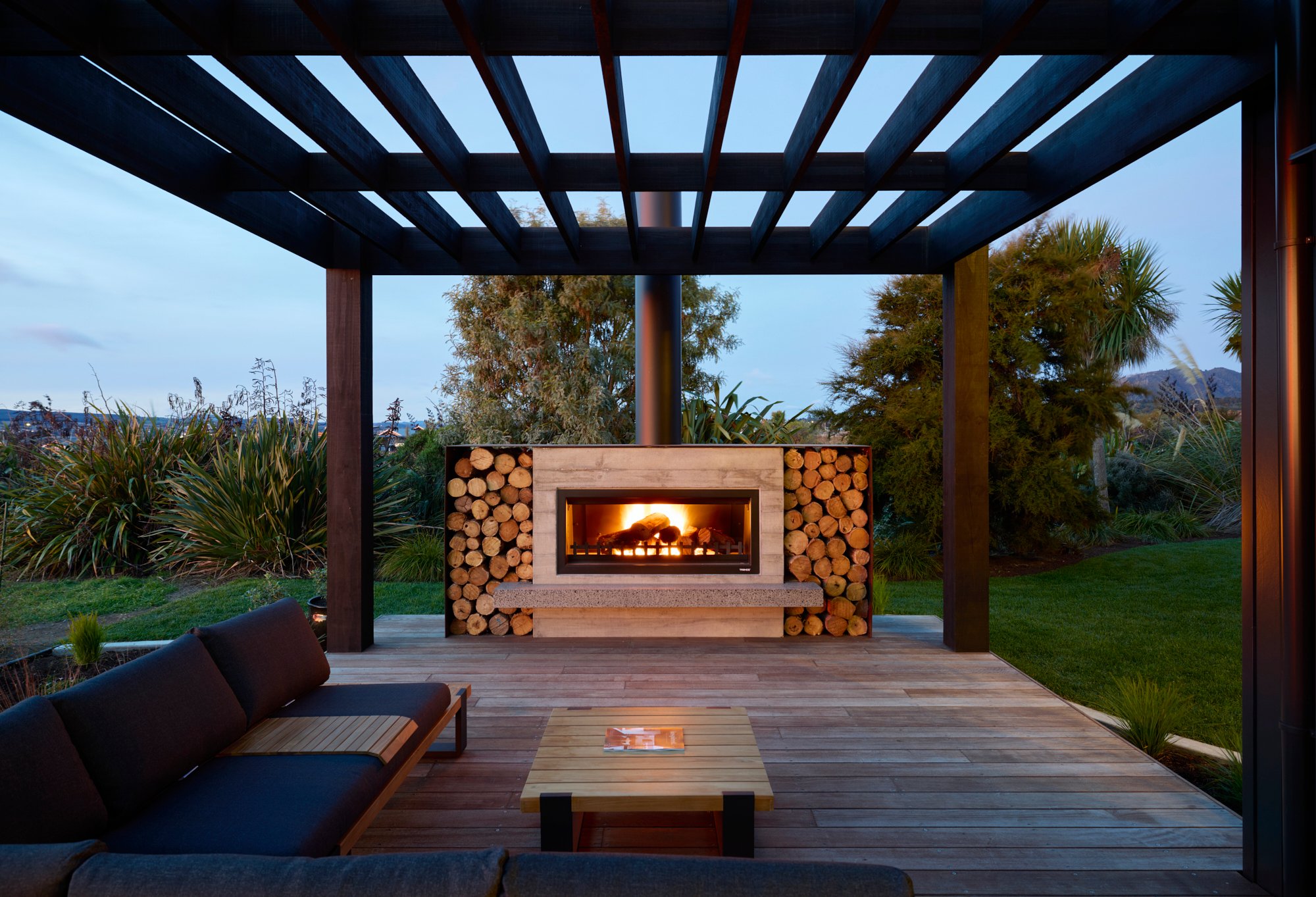 Burton Fireplace: Wood-grain concrete finish | 600mm Corten steel wood boxes | Polished Hearth | View this fire
What About Ventilation and Heat?
Because Trendz fireplaces are designed to minimise smoke output, especially with the slimline cap on our flues, airflow isn’t typically the main concern. Instead, the focus is ensuring there’s enough open space for heat to safely disperse .
Even under a louvre or fixed roof, the fireplace should have:
- Adequate clearance from overhead beams or roofing
- Sufficient open sides for heat release
- A clear pathway for the flue system
- A minimum of 600 mm of non-combustible/fire-retardant material in front of the firebox opening is a standard safety recommendation to protect nearby surfaces and prevent accidental fires.
As long as those requirements are met, the fireplace will operate safely and comfortably, even in a partially enclosed or sheltered outdoor room.
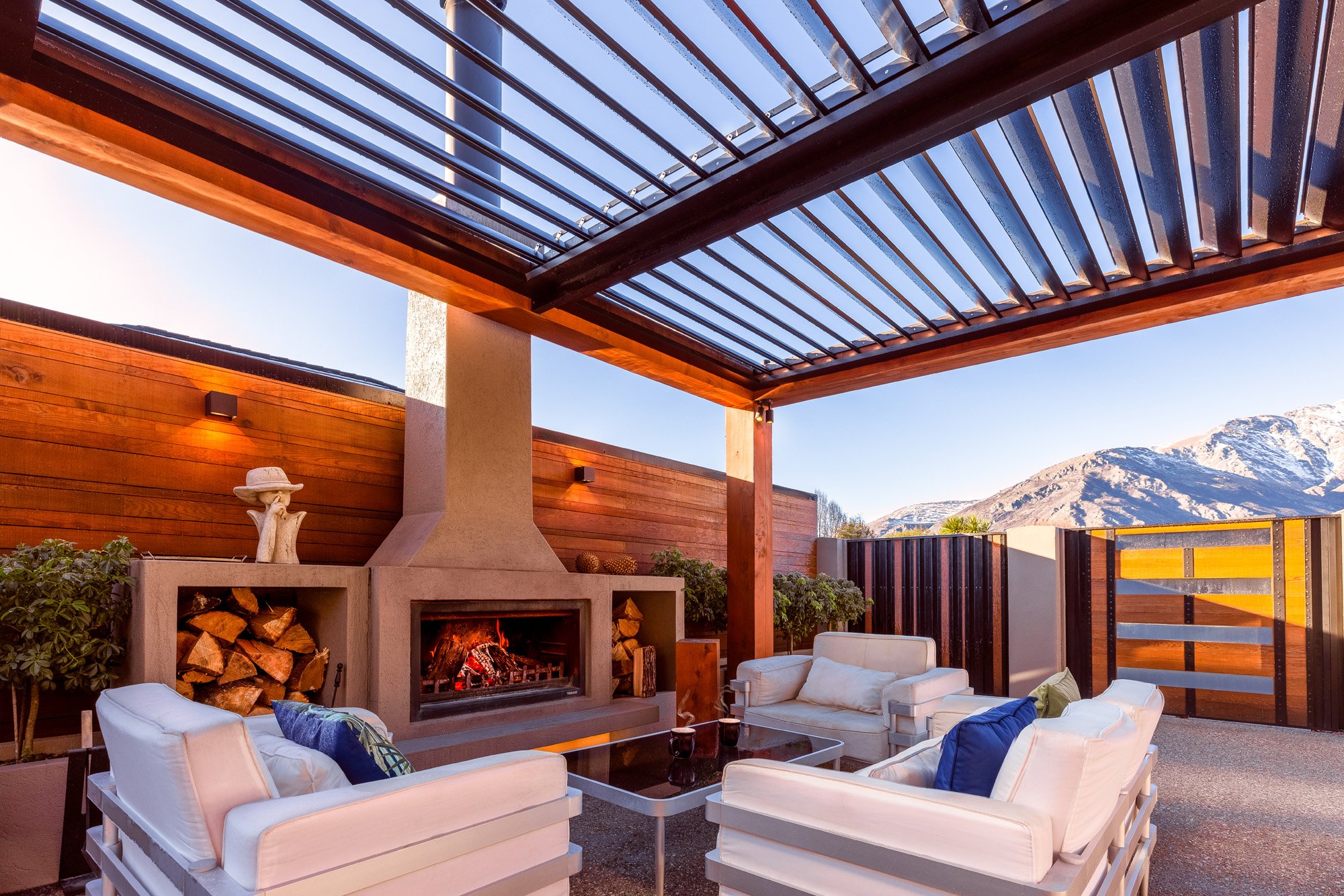 Douglas Fireplace: Plaster & paint finish | 500mm GRC wood boxes | GRC hearth | View this fire
So, What’s the Best Option?
There’s no single rule, the best setup depends on:
- Your louvre system design
- Clearance distances
- The fireplace model
- How the space will be used
- Your budget and build timeline
Some homeowners prefer the fireplace fully under cover for sheltered winter use, while others only need it partly sheltered or just outside the louvre line for a more straightforward install.
Both can work beautifully, it just takes the right planning.
A louvre roof and outdoor fireplace are an incredible combination, creating an all-weather entertaining space you’ll actually use. With a little thought around placement and compliance, installing a fireplace under (or beside) a louvre is absolutely achievable.
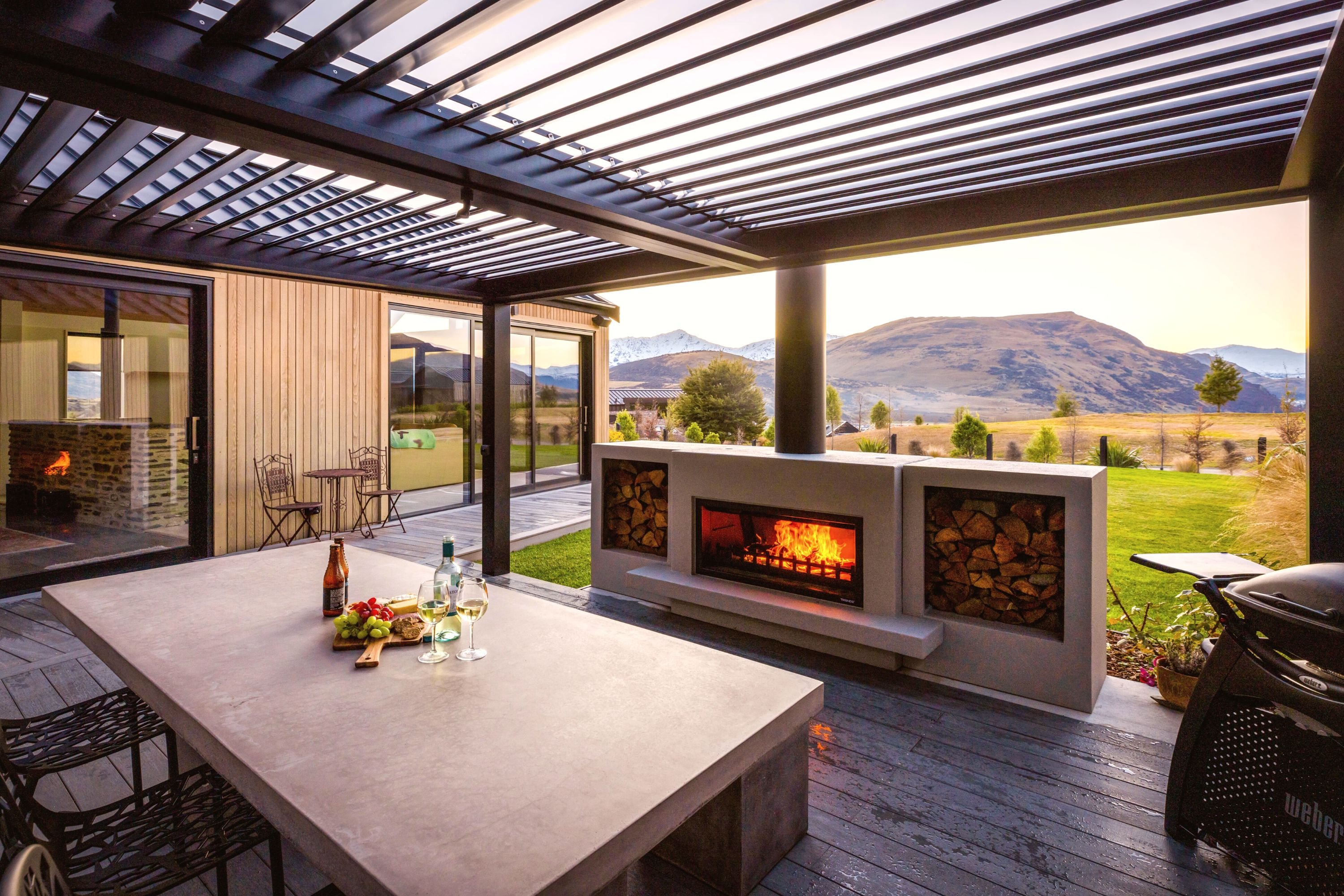 Mini Burton Fireplace: Plastered & painted Kensington Grey | 800mm GRC wood boxes | GRC hearth | View this fire
Not sure where your fireplace should sit?
We help homeowners and designers every week work through layout options, compliance considerations, and cost pathways, so you can get the look you want without the guesswork.

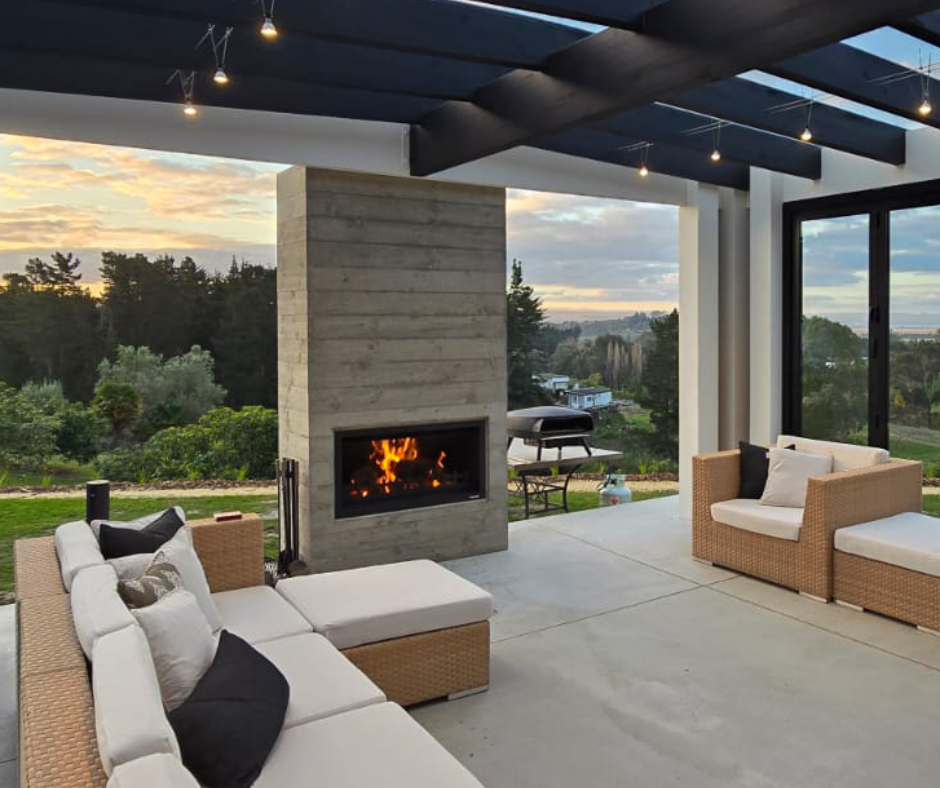 Hudson Fireplace: Board formed concrete finish | View this fire
Have a question? Contact us