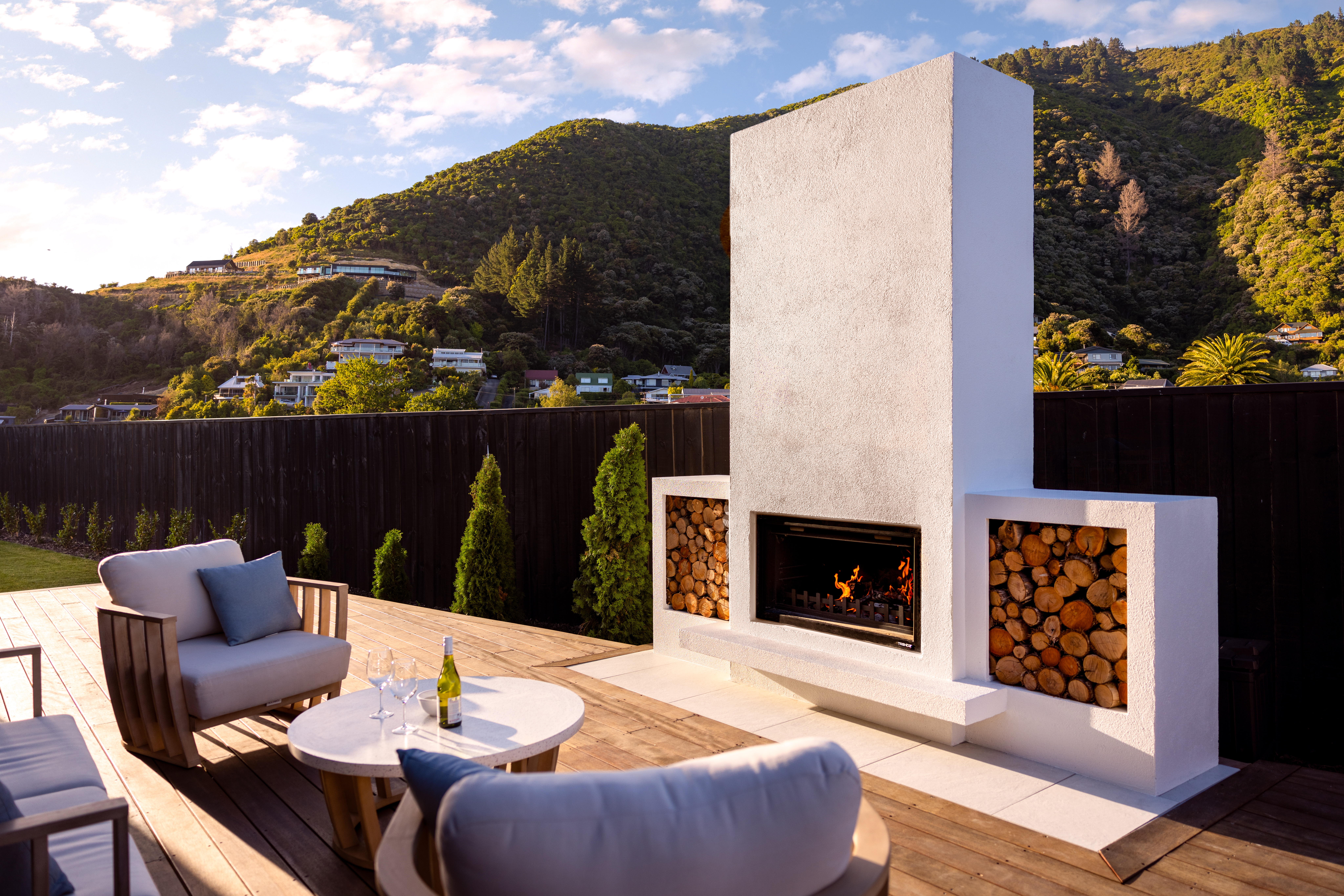
If you’ve read our guide on installing an outdoor fireplace on a timber deck, you’ll know that it's important when dealing with a timber deck (aka a combustible material) to have a non-combustible surface in front of the fireplace opening.
What Can the Non-Combustible Area in Front of my Outdoor Fireplace Look Like?Here’s the good news: it doesn’t have to look out of place or unconsidered. Done well, it can actually become a design feature.
Let’s look at some popular options and inspiration for creating a safe, compliant, and beautiful outdoor fireplace setting.
Why You Need a Non-Combustible Area
Outdoor wood fireplaces produce heat, sparks, and occasional embers. To protect timber decking (or any combustible surface), building codes require a non-combustible material in front of the firebox opening.
NZ/Australia (AS/NZS 2918:2001): Requires a floor protector extending at least 300mm beyond the door opening and 200mm to each side. Some models require an insulated floor protector.
Benefits of a non-combustible area in front of your outdoor fireplace:
- Protects against stray embers
- Shields decking from radiant heat
- Provides a safe loading zone for firewood
- Helps meet building and safety requirements
Most Trendz fireplace specifications recommend 600mm out from the firebox opening. The required dimensions will depend on your specific model and local regulations, so always check installation specifications.
Now let’s talk design.
Poured Concrete
A concrete extension is one of the most common solutions, especially when a concrete pad is already being poured to support the fireplace weight.
Advantages of a concrete hearth:
- Clean, modern look
- Extremely durable
- Easy to form to exact compliance measurements
- Can be finished smooth, polished, or slightly textured
There's also ways to make the concrete pad look intentional, either adding a tint or adding control joins that align with your wodboxes.
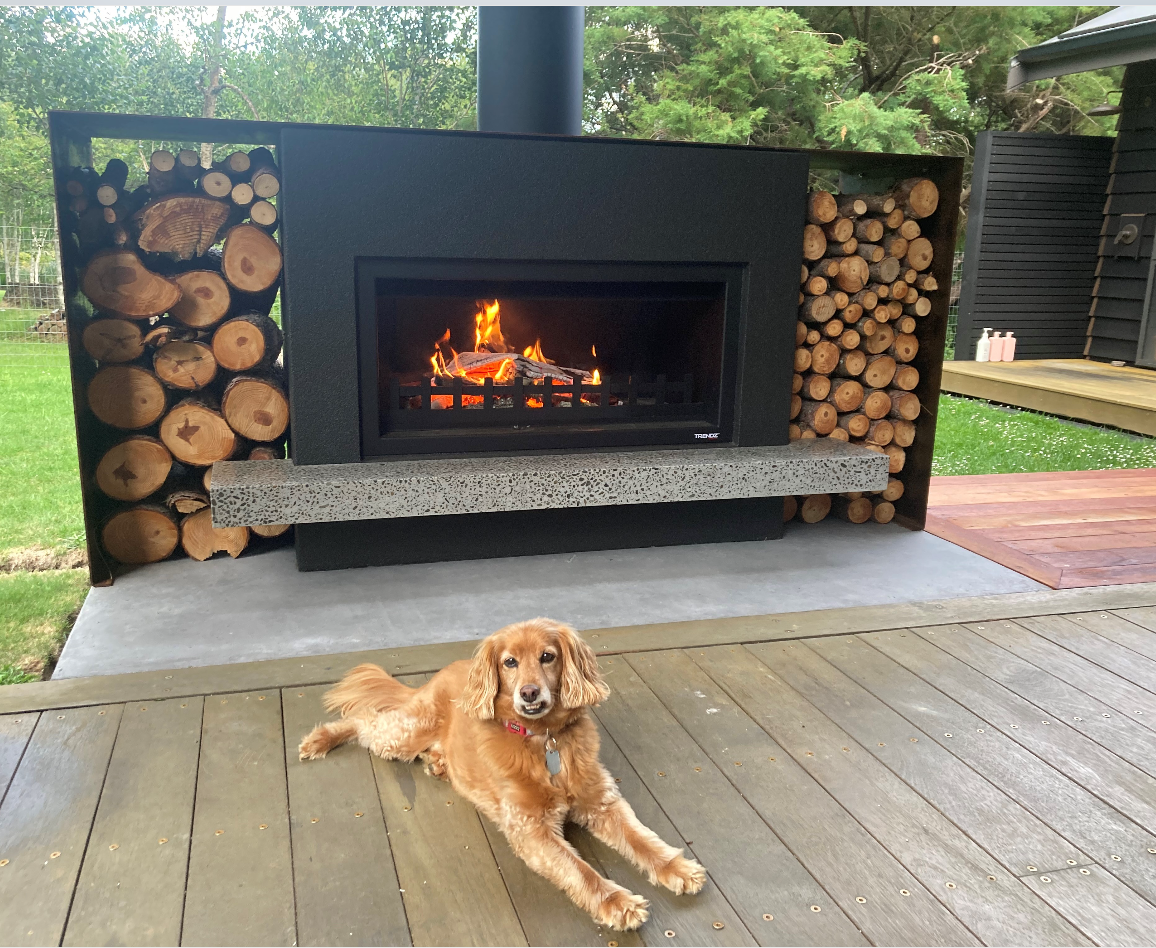 Mini Burton outdoor fireplace with polished concrete hearth & corten steel woodboxes.
Large Format Pavers or Tiles
Large pavers can soften the transition between timber and fireplace while still providing a compliant non-combustible zone. And bonus, you can then match to a nearby patio area or tie in the style with stepping stones in the garden.
Design advantages:
- Available in stone, concrete-look, or porcelain finishes
- Creates a defined “fire zone”
- Adds visual weight to anchor the fireplace
Tip: Ensure pavers are rated for fire and outdoor use, plus, properly supported, they must sit on a stable, non-combustible base.
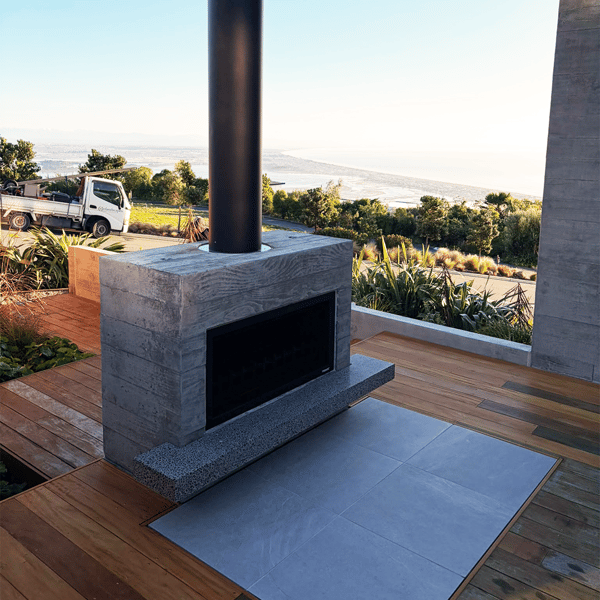 Mini Burton outdoor fireplace with 'board form finish', + polished concrete hearth
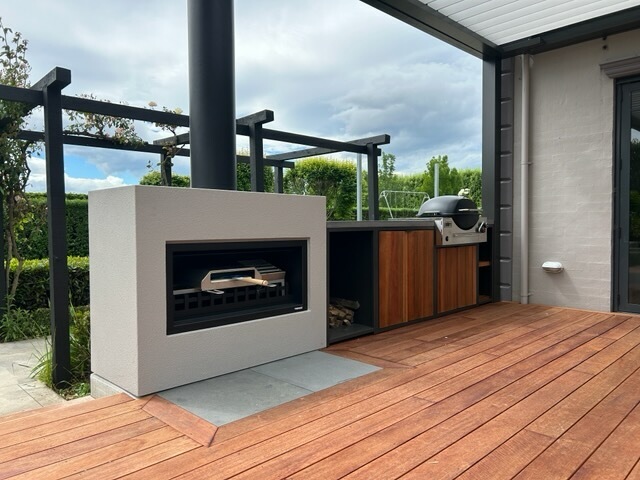 Mini Burton outdoor fireplace with pizza oven insert.
You may notice in the above examples they have both treated the threshold between the tiles and deck in different ways, either aligning or framing them.
These small detailing decisions can make a big difference to the overall finish.
Natural Stone Feature
If you want the hearth to feel intentional and elevated, natural stone is another beautiful option, that elevates the space and allows for that material to be used elsewhere. Popular choices in New Zealand include:
- Bluestone
- Schist
- Basalt
- Granite
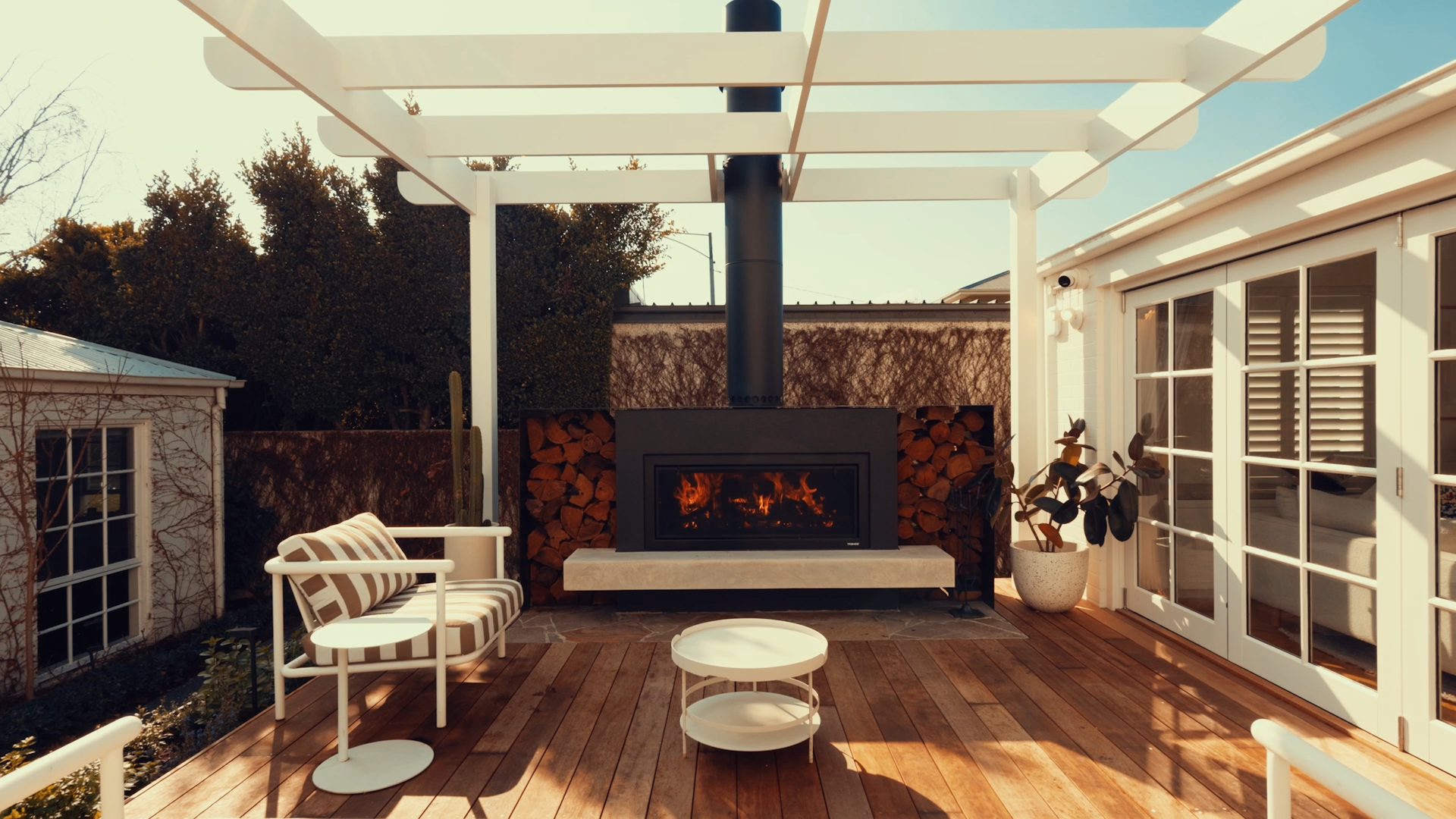 Burton outdoor fireplace with 600mm Corten steel woodboxes and custom hearth.
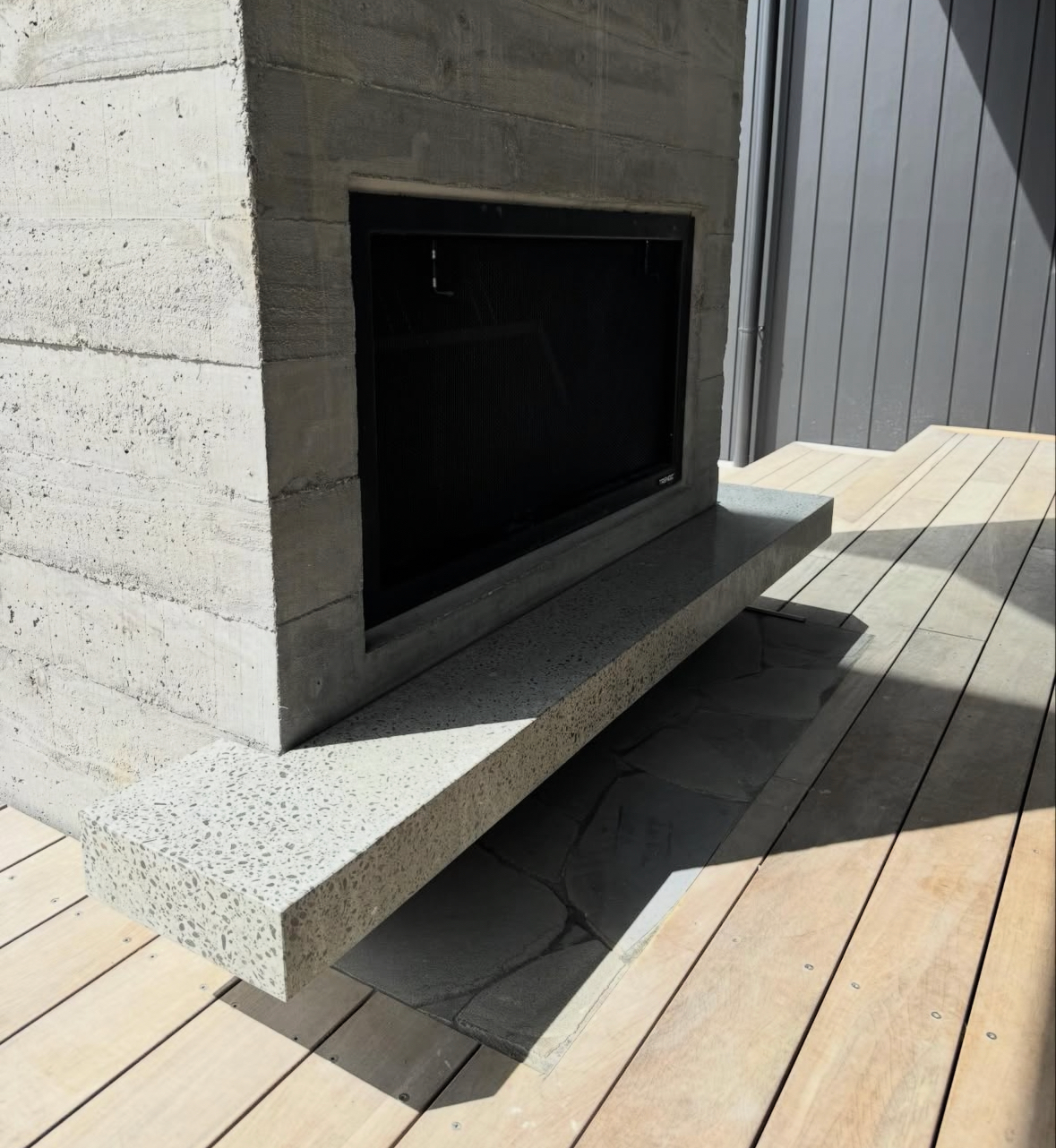 Hudson outdoor fireplace with board-form finish and polished concrete hearth.
Matching the Fireplace Cladding
Extending the same material from the fireplace cladding through to the hearth is a seamless way to handle the non-combustible zone.
A great example of this can be seen with the Riverview fireplace, where porcelain tiles wrap the fire surround and continue out onto the hearth. The result feels cohesive, deliberate, and beautifully integrated into the overall outdoor space.
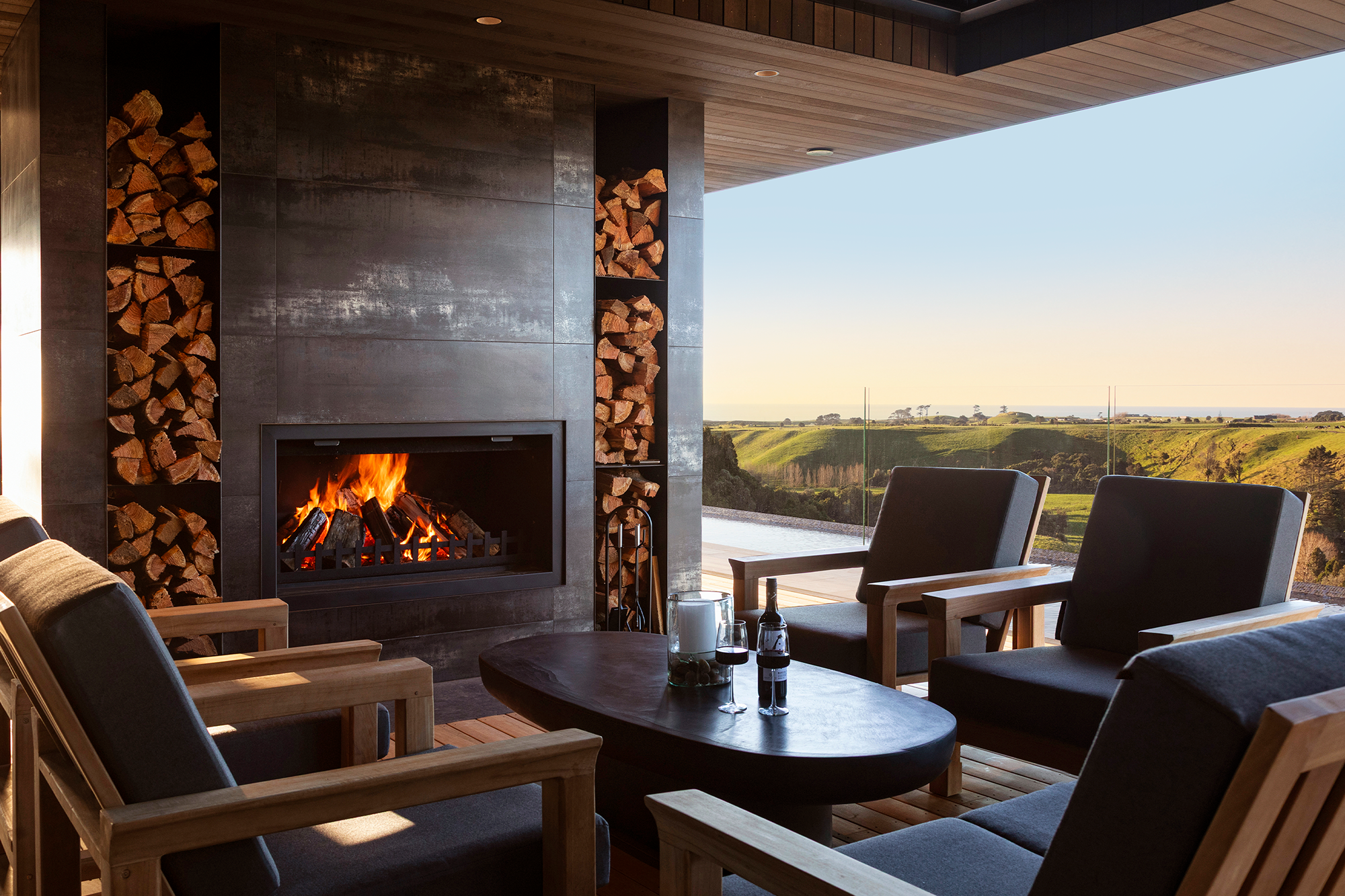 Custom outdoor fireplace with T1200 firebox insert.
Designing It to Feel Integrated
The key is ensuring the non-combustible area feels intentional, proportional to the fireplace, and connected to the surrounding materials.
Choose colours that complement your fireplace cladding and take visual cues from nearby finishes. Repeating tones or materials helps the hearth feel like a natural extension rather than an added requirement.
Texture can also play an important role, whether it’s polished concrete, subtle stone variation, or large-format tiles. A slight contrast in finish can define the fire zone while still keeping the overall look cohesive.
A few design tips:
- Align hearth edges with deck board lines
- Centre it precisely on the firebox opening, but if you have fireboxes, why not extend it out to match the complete width of the fireplace not just the firebox opening.
- Keep transitions flush to avoid trip hazards
If you’re building a concrete pad at deck height (as discussed in our previous blog), the hearth can often be integrated directly into that foundation for a seamless look, as mentioned earlier.
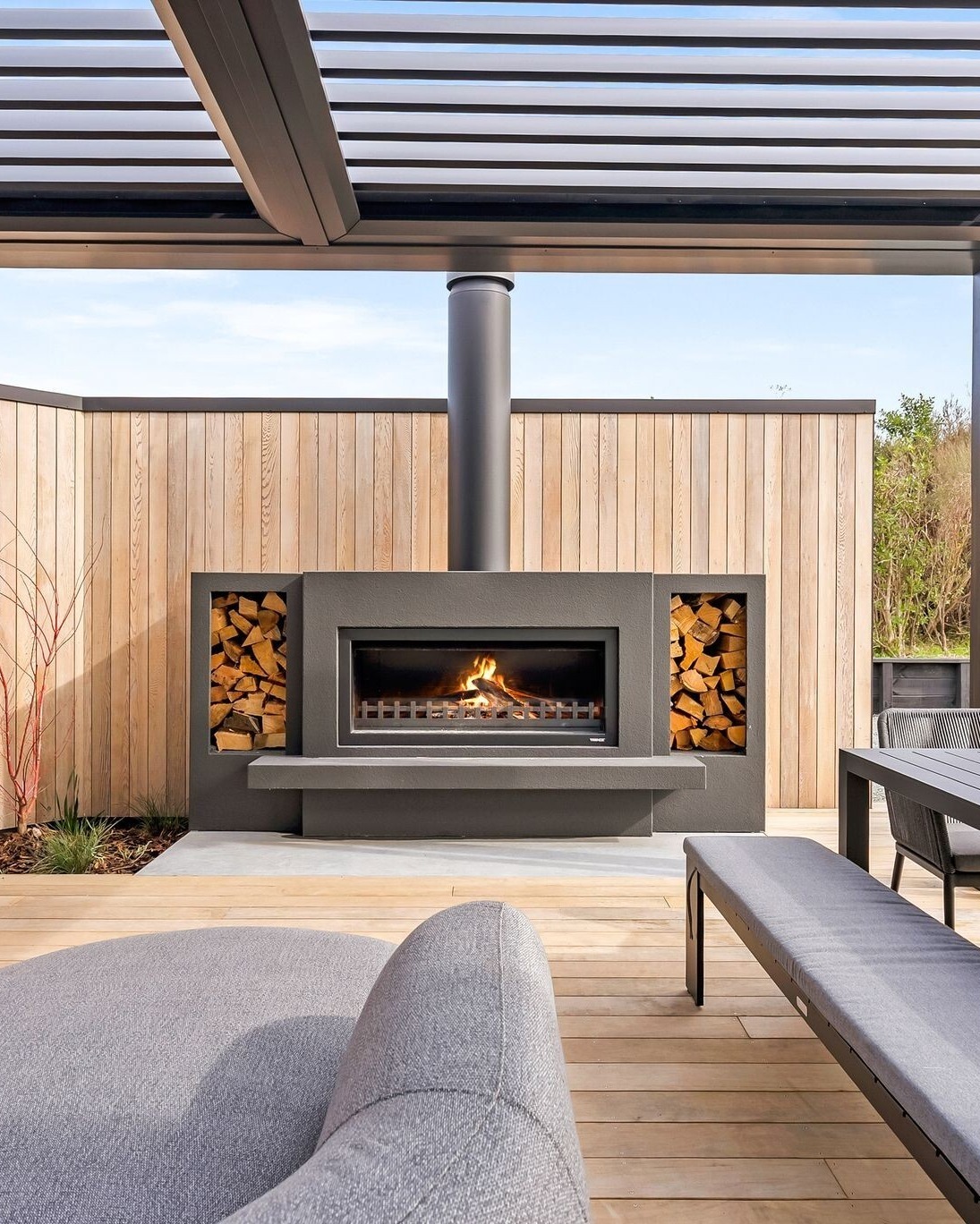 Burton outdoor fireplace with 600mm GRC woodboxes and GRC hearth.
Planning Your Fireplace Project?
Whether you’re working with an existing timber deck or starting from scratch, we hope this has inspired a few ideas on how to embrace the compliance requirements, and make them part of the design story.
Our team is always happy to talk through your layout and help you get it right from the start. Let's chat!
Disclaimer: All images are provided as design examples only. Compliance requirements may vary and are subject to change. Always consult current installation documentation and local building regulations before proceeding.
Have a question? Contact us